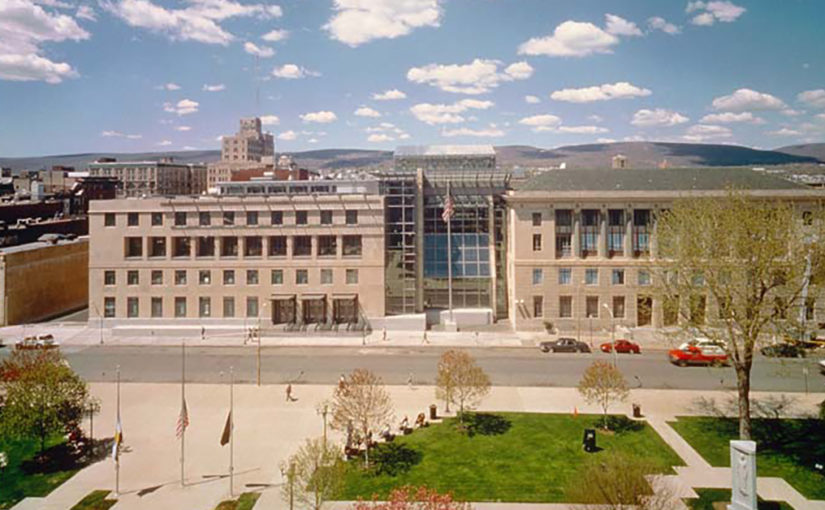
US Pipelining, LLC., an emerging leader in Cured-In-Place-Pipelining (CIPP), and trenchless lining solutions recently completed a federal project which included epoxy pipelining rehabilitation at the William J. Nealon Federal Building, and United States Courthouse for the Middle District of Pennsylvania.
Located in Scranton, Pennsylvania, it is the city’s first federally owned building. Originally erected in 1894 as a federal post office, the building was listed on the National Register of Historic Places in 2018.
Continue reading Our Use of Epoxy Pipelining Rehabilitation at the Historic William J. Nealon Federal Building →
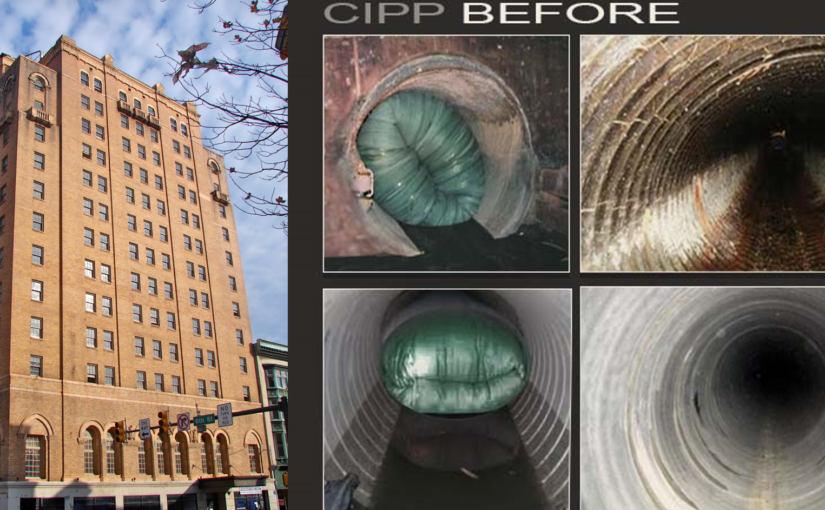


 Where U.S. Pipelining is restoring a 24” diameter high temperature, high pressure intercondenser line in the In-Space Propulsion Facility (ISP) at NASA’s John Glenn Plum Brook facility. Using materials and resins designed to meet NASA specification, USP will install the project specific Cured-In-Place-Pipe (CIPP) within the facility’s intercondenser line.
 Plum Brook Station is a remote test facility for the NASA Glenn Research Center in Cleveland, Ohio. Located on 6,400 acres in the Lake Erie community of Sandusky, Plum Brook is home to four world-class test facilities, which perform complex and innovative ground tests for the international space community.
 The Space Power Facility (SPF) houses the world’s largest and most powerful space environment simulation facilities including the Space Simulation Vacuum Chamber measuring 100 ft. in diameter by 122 ft. high. The Reverberant Acoustic Test Facility is the world’s most powerful spacecraft acoustic test chamber, which can simulate the noise of a spacecraft launch up to 163 decibels or as loud as the thrust of 20 jet engines.
 The over-the-hole installation of 10-ft diameter CIPP liner is among the largest to have been successfully completed anywhere. Requiring more than a year of planning, sourcing, and logistics, the project involved support from the nation’s premier suppliers to the industry.
 “As projects go, this was one of the more challenging with which we’ve been involved,” said Bill Moore, AOC product leader-CIPP resins. “Our team was engaged from day one as we worked through the selection and formulation of the resin in order to meet both environmental and engineering specifications. The sheer size of the liners being installed required six tankers carrying over 240,000 lbs of resin to be transported to the base from our plant in Canada. The logistics and delivery of material was a critical component.”

 Cured-in-place pipe repair offers a no-dig solution to infrastructure rehabilitation
